

Some things are just worth making from scratch because the process is so gratifying. Homemade pasta comes to mind. And other things that might seem like they’re more trouble than they’re worth, actually end up being a no-brainer.
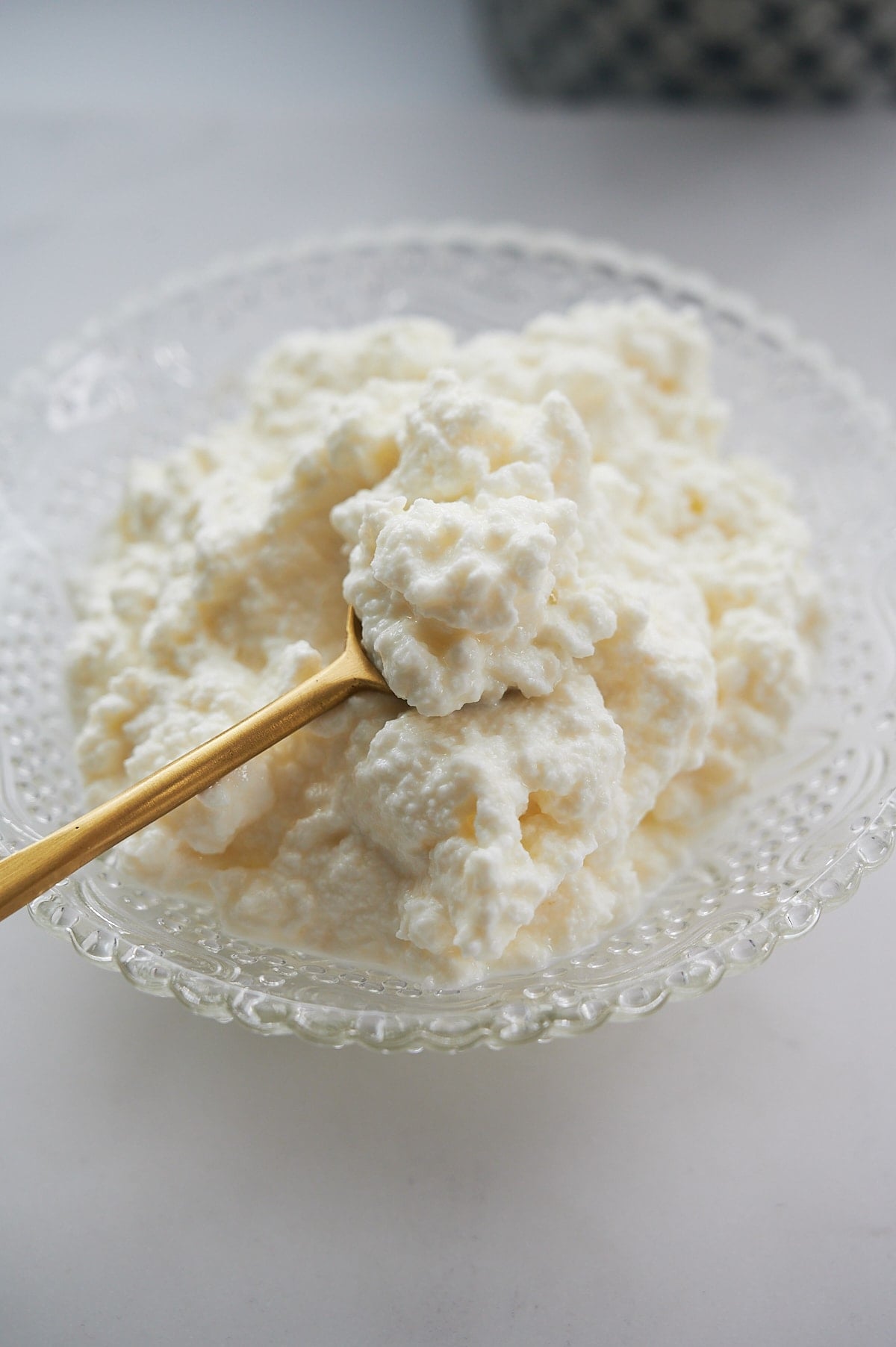
Like making homemade ricotta cheese. It just has to be hard to do, right? I’m ready to prove that you can do it and get some darn creamy results. Like lick-the-spoon results.
You’ll be dreaming up all the places you can use it.
⇢ Ways to use homemade ricotta ♥️: use as the base for crostini and figs, mix it in the chicken and dumpling soup batter, or plop on charred pepperoni pizza. All so good!
This post contains links to affiliate websites including Amazon. I make a small commission for any purchases made using these links. Thank you!
Got milk? Make homemade ricotta!
You might be thinking…”why would I make ricotta cheese from scratch when I can buy it?”
Save This Recipe!
Here are a few reasons:
Tastes better. While there are many delicious store-bought ricotta cheese brands, there is nothing like making your own and being able to control the quality of the ingredients and seasoning.
Better texture. Handmade ricotta cheese is fluffy and light while store-bought can be like a thick paste. Spread some on a piece of toast with jam and you’ll taste the difference!
More economical. Save yourself some money and make ricotta cheese from scratch. A half gallon of milk costs about $2-3 while a container of ricotta is usually double that. And you save yourself a trip to the store.
Ingredient rundown
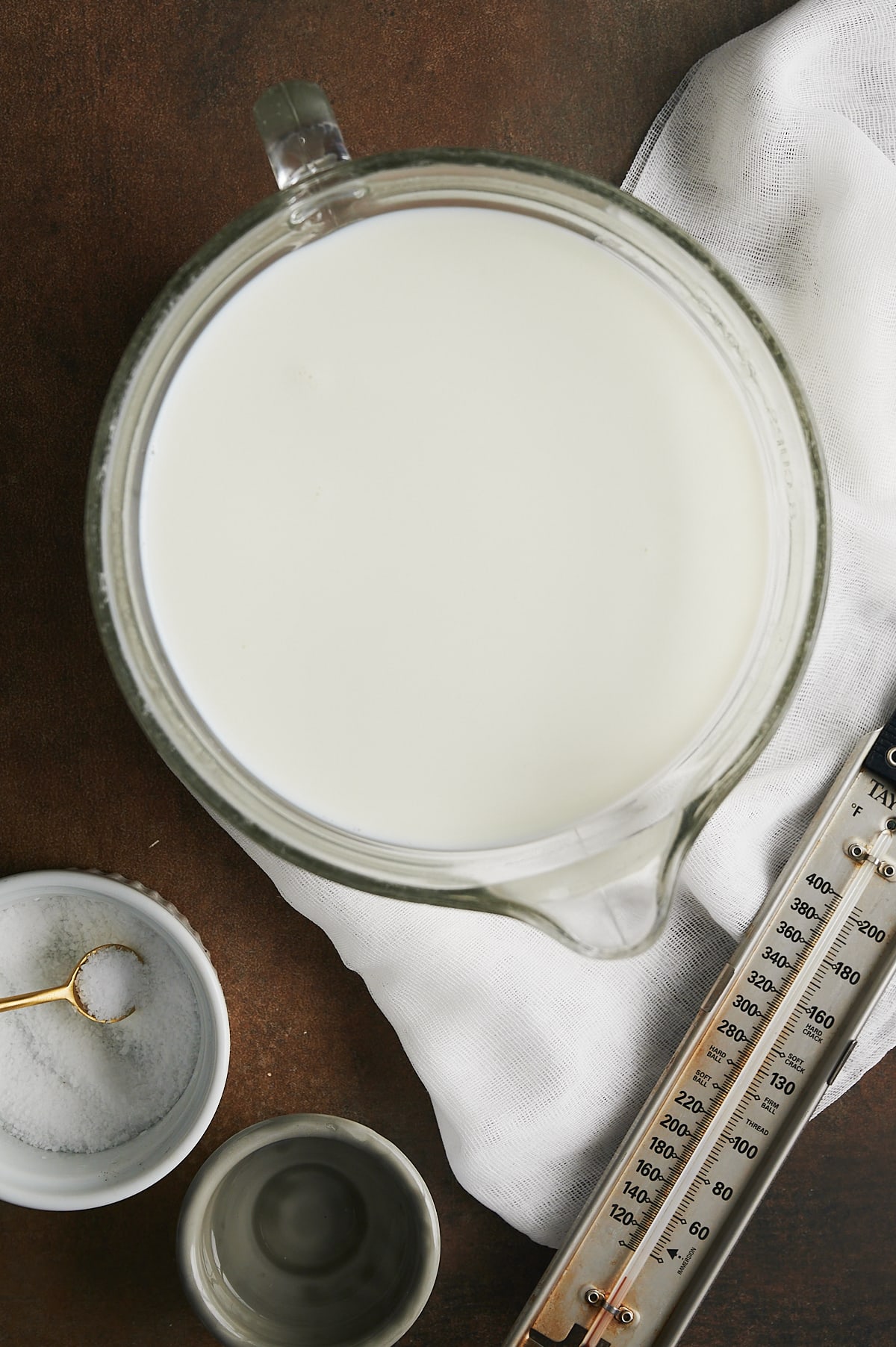
Only 3 ingredients and you’ll be in ricotta heaven!
Homemade ricotta cheese: step by step
Organize all of your equipment and gather all your ingredients.
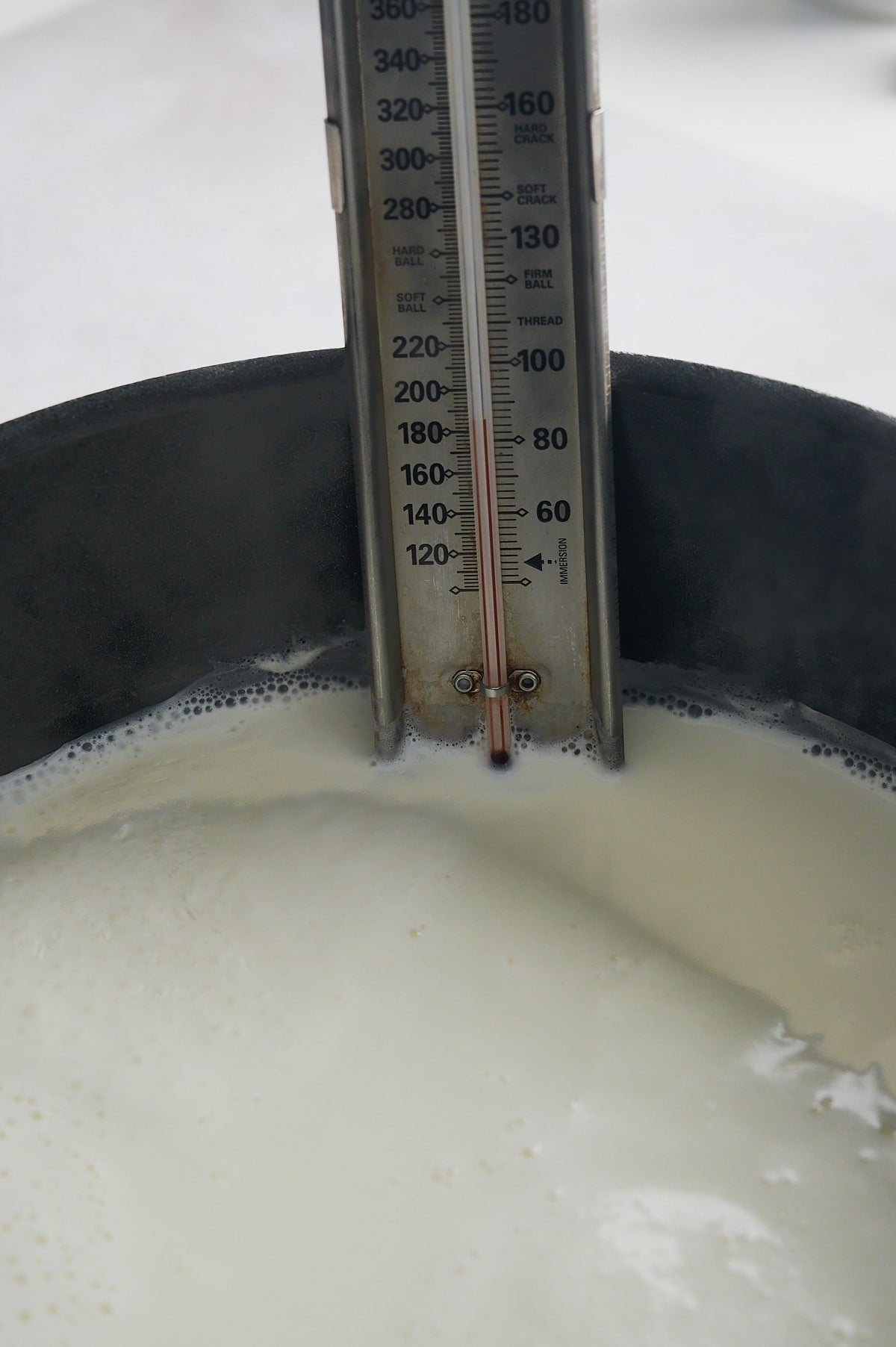
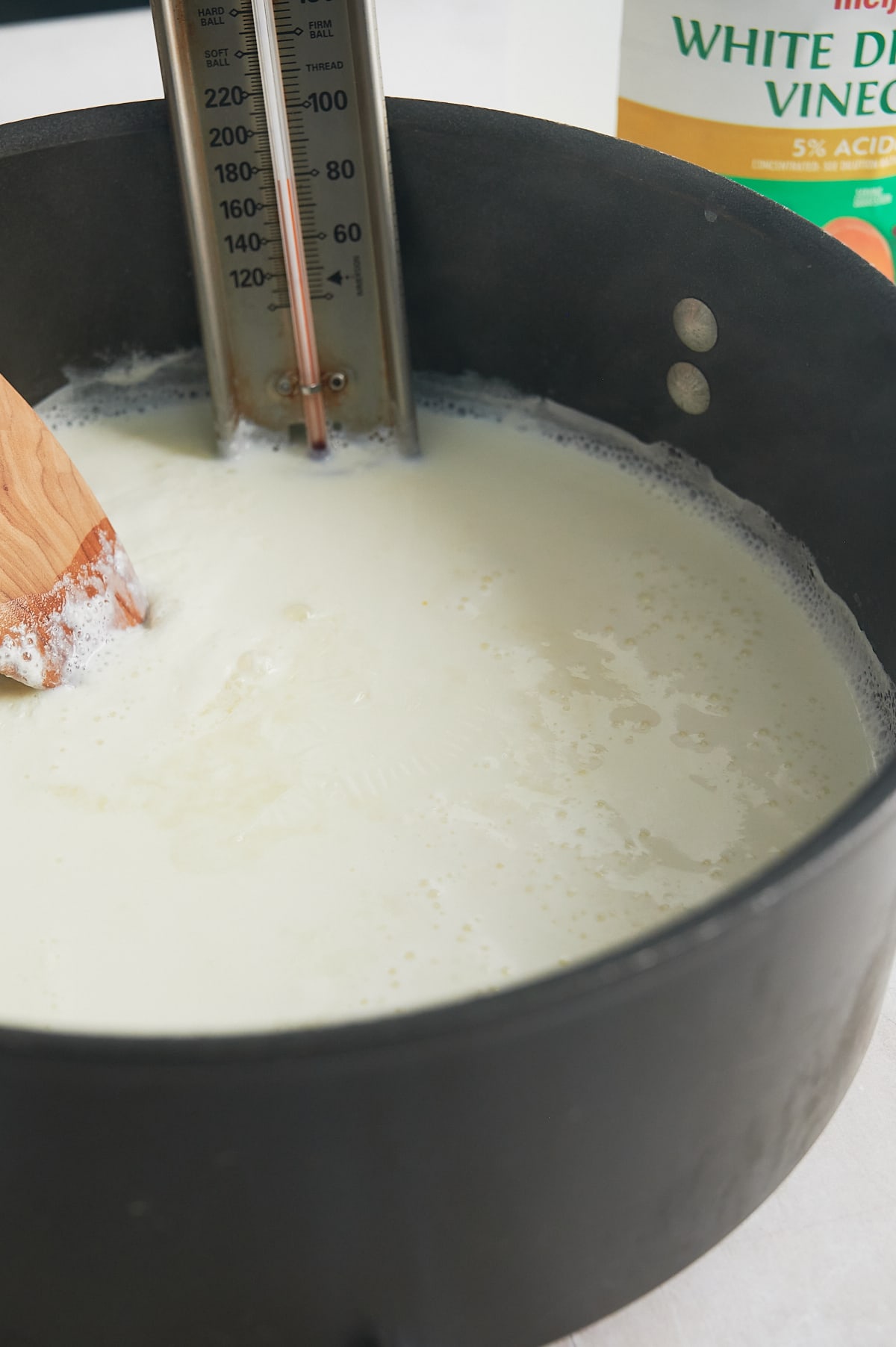
- Pour the milk into a medium size sauce pan with the thermometer attached to the side. Make sure the tip of the thermometer is in the milk but not resting on the bottom of the pan.
- Heat the milk over medium heat to 185-195˚. Stir in the salt and stir to dissolve. Be careful not to boil or scald the milk
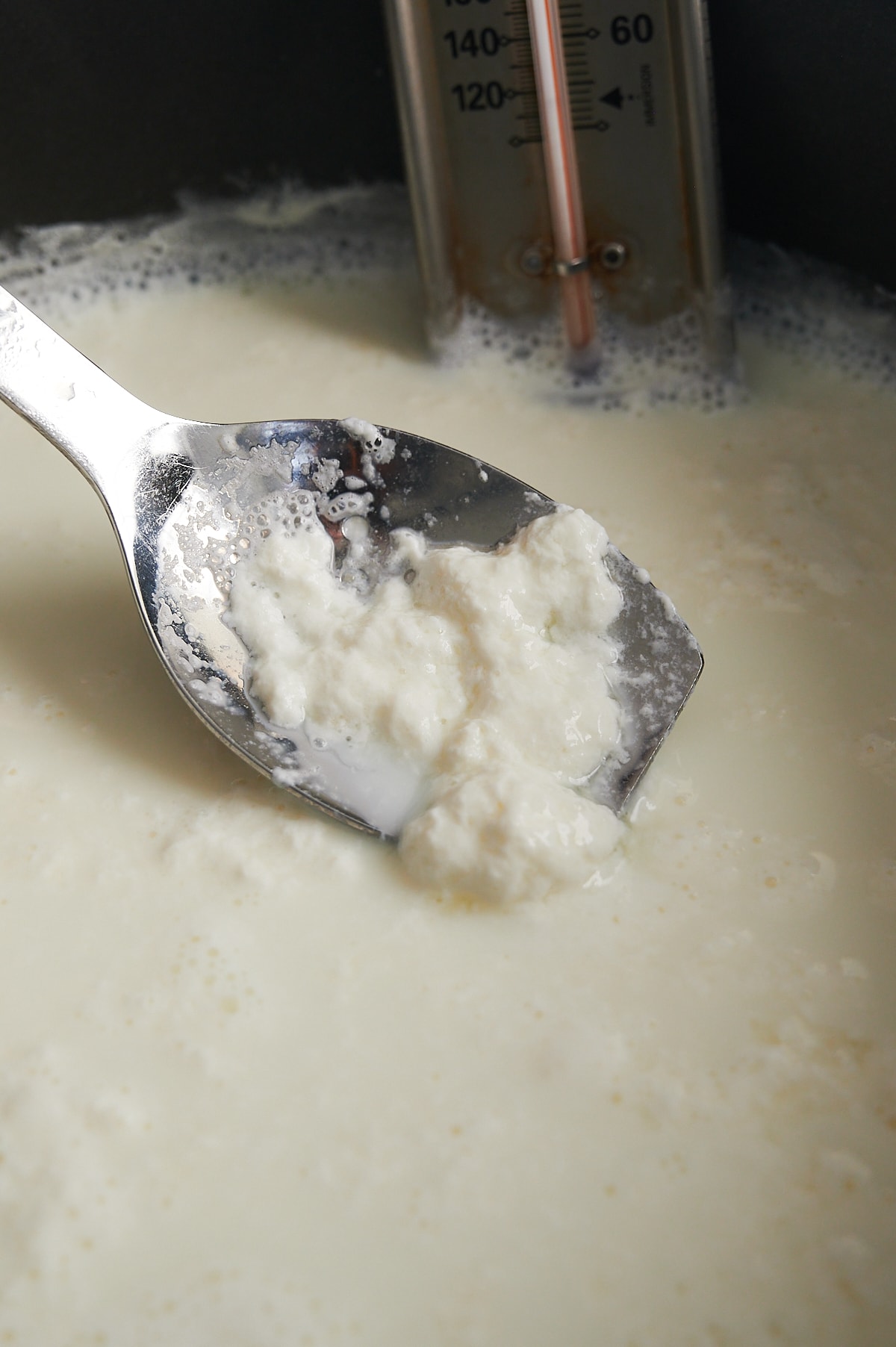
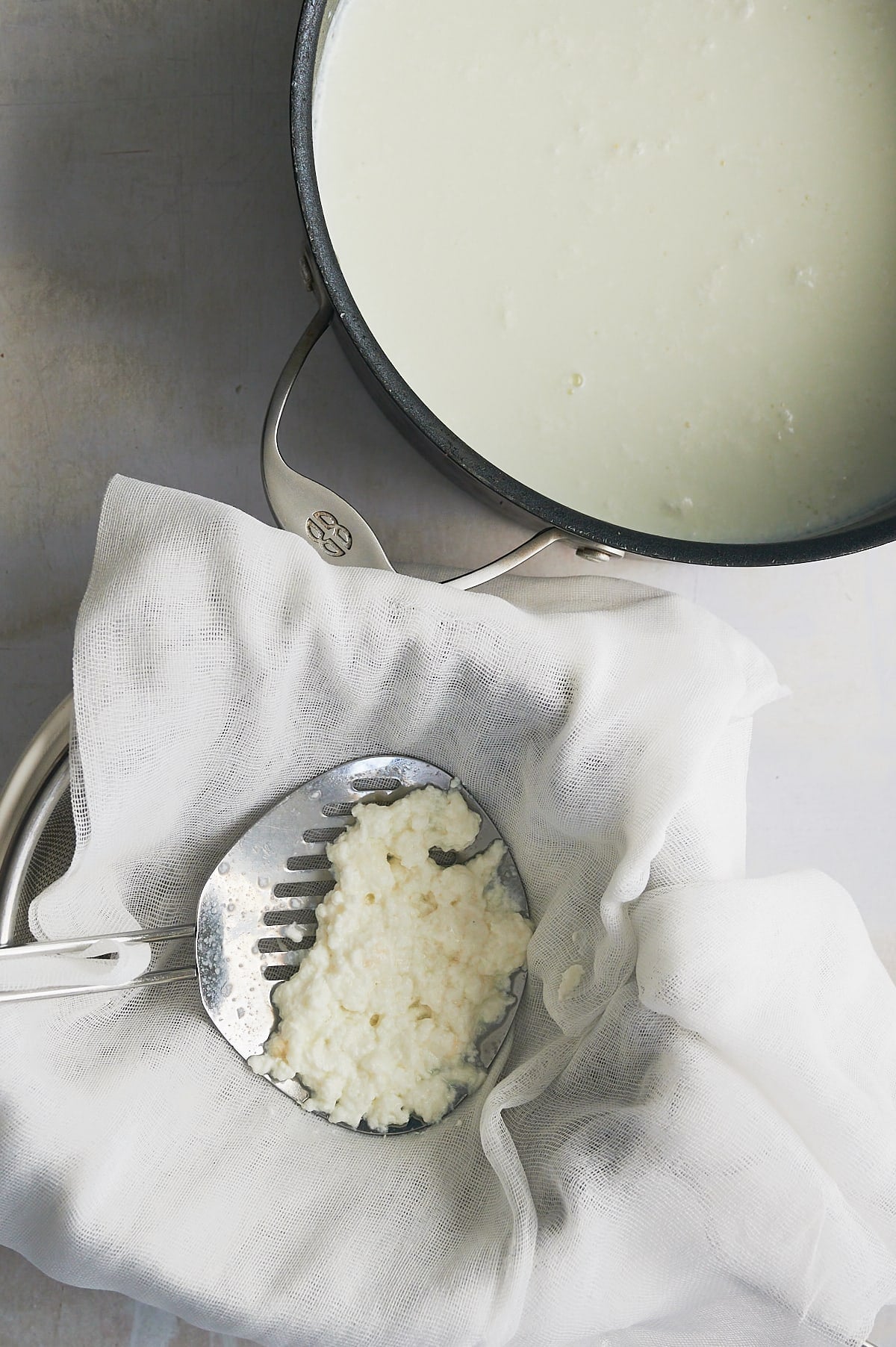
- Once the milk has reached temperature, remove from heat and immediately add the vinegar. Stir and you should start seeing curds develop. Add more vinegar as needed and let the cheese rest for 10 minutes.
- Allow the cheese to cool before using a slotted spoon to drain into cheesecloth-lined strainer.
Tips for the best handmade ricotta cheese
Start with less vinegar and then add more as needed —1/2 Tablespoon at a time—until curds start developing.
Don’t pour the cooled ricotta cheese and whey over the strainer. This will keep your cheese creamier.
Keep the whey and repurpose it to add to sourdough bread dough, pancake batter or biscuits for amazing flavor.

Made this recipe?
I’d love it if you’d share your review and leave a star rating and comment!
15 Minute Creamy Homemade Ricotta Cheese from Scratch
SAVE THIS RECIPE
Equipment
- cheesecloth
- strainer
- oil and candy thermometer that attaches to the side of a saucepan
Ingredients
- ½ gallon whole milk
- 1 teaspoon salt
- 3 T white vinegar, or more as needed
Instructions
- In a saucepan with a thermometer attached to the sides, heat the milk and salt over medium heat until reaching a temperature of 185-195˚. Adjust the heat to maintain the temperature of the milk.½ gallon whole milk, 1 teaspoon salt
- Once the temperature has been reached, pour the vinegar and stir into the milk. Turn off the heat and allow the milk to sit for 10 minutes. Hopefully the milk will separate into curds.3 T white vinegar
- Use a slotted spoon to gently spoon the curds into cheesecloth set over a bowl or pan. Drain the ricotta. Taste and correct for seasoning.
Notes
- Homemade ricotta will keep in the refrigerator for about 5 days. Chill in an airtight, sealed container.
- Pour or strain off any whey that appears during refrigeration.


do you know if i can use apple cider vinegar instead of white vinegar?
Hi Leana – yes it might have a bit more “tang” but ACV will work as well!
So good and fresh! Great for lasagna.
So glad you enjoyed the ricotta, Nina! And I love your name 😊♥️
I didn’t get 2 cups .. more like a little over a cup. I had a lot of milk underneath the curds. However the ricotta is amazing.
Is this normal?
Hey Ginny! Thank you for letting me know. So happy you loved the flavor! A couple of questions – what kind of milk did you use and how much vinegar did you end up using? The liquid left shouldn’t be milky but more like milky water.
I used whole milk and 3 tablespoons of vinegar. The liquid that drained from the curds was milky water. What I was surprised about was how much milk in the pan didn’t curd
Ok thank you so much! I really appreciate it…I will test one more time this week and get back to you because that didn’t happen in my previous tests. Keep you posted!