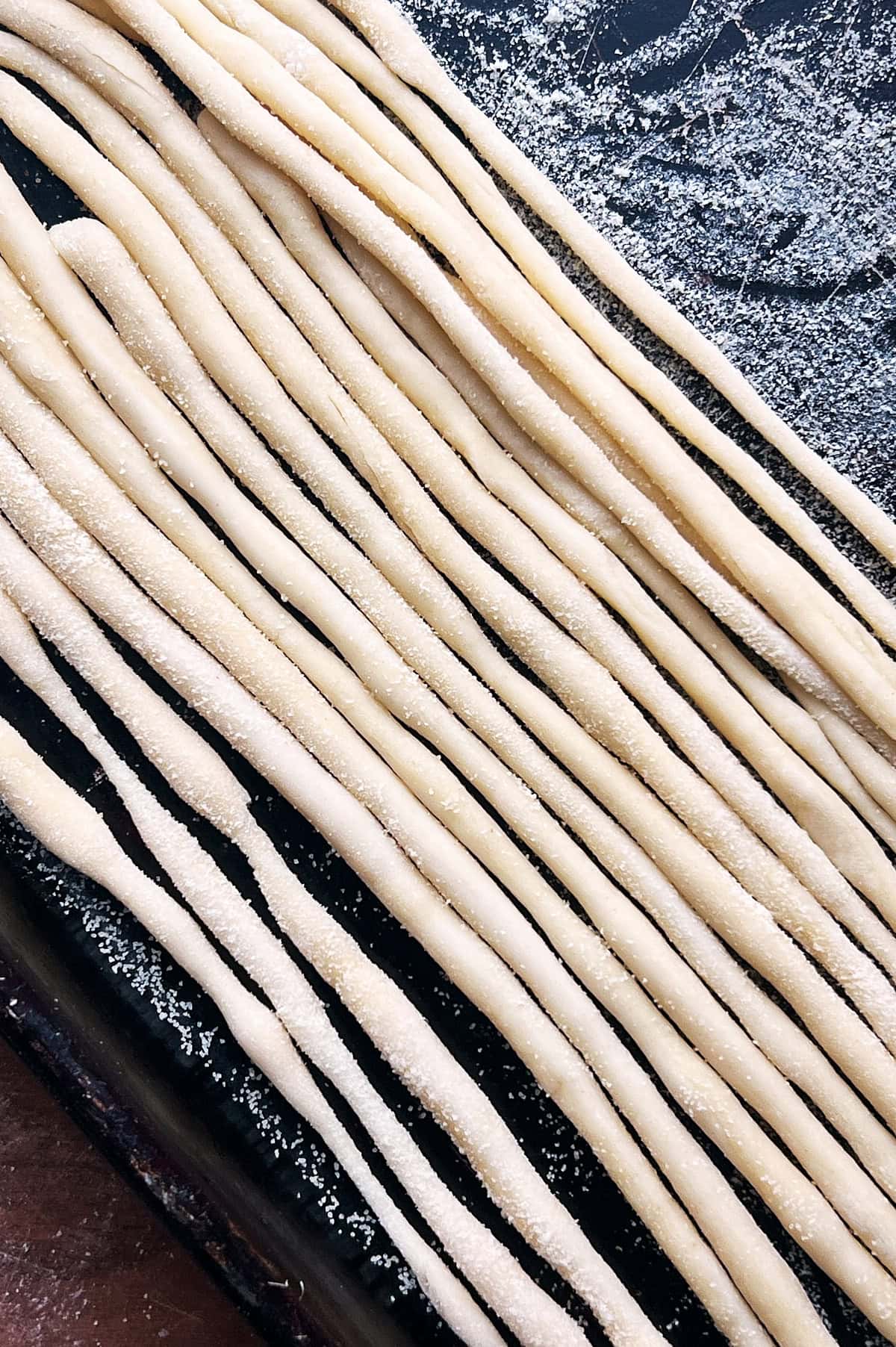
My first time tasting pici was in Tuscany which is pretty much the home to the iconic pasta shape. It’s not a traditional pasta shape that you find here in the States but once I tried it, I was smitten.
And once I learned how easy pici is to make from scratch, I was in love. It requires few ingredients and can be initially rolled with either a pasta machine (which make things easier) or a rolling pin (takes a little more time and muscle).
Plus, pici is a really easy pasta shape to make with the whole family. It’s essentially rolled like a snake so kids as young as 4 or so can get in on the pasta-making action.
This post contains links to affiliate websites including Amazon. I make a small commission for any purchases made using these links. Thank you!
What is pici pasta?
Save This Recipe!
Pici is a rustic, hand-rolled, pasta shape. It’s long like spaghetti and is also what I call a “twirly” pasta in that it’s twirled into a spoon like this creamy bucatini but not to be confused with the shorter and wrapped trofie pasta.
In Tuscany, you will find pici all over trattoria menus, many times served with a wild boar sauce. Side note: if you go to Tuscany, order the wild boar pici. It is unbelievably savory, rich and delicious.
Ingredient rundown
Homemade pici only requires a few ingredients and about an hour of time, including some resting time for the dough.
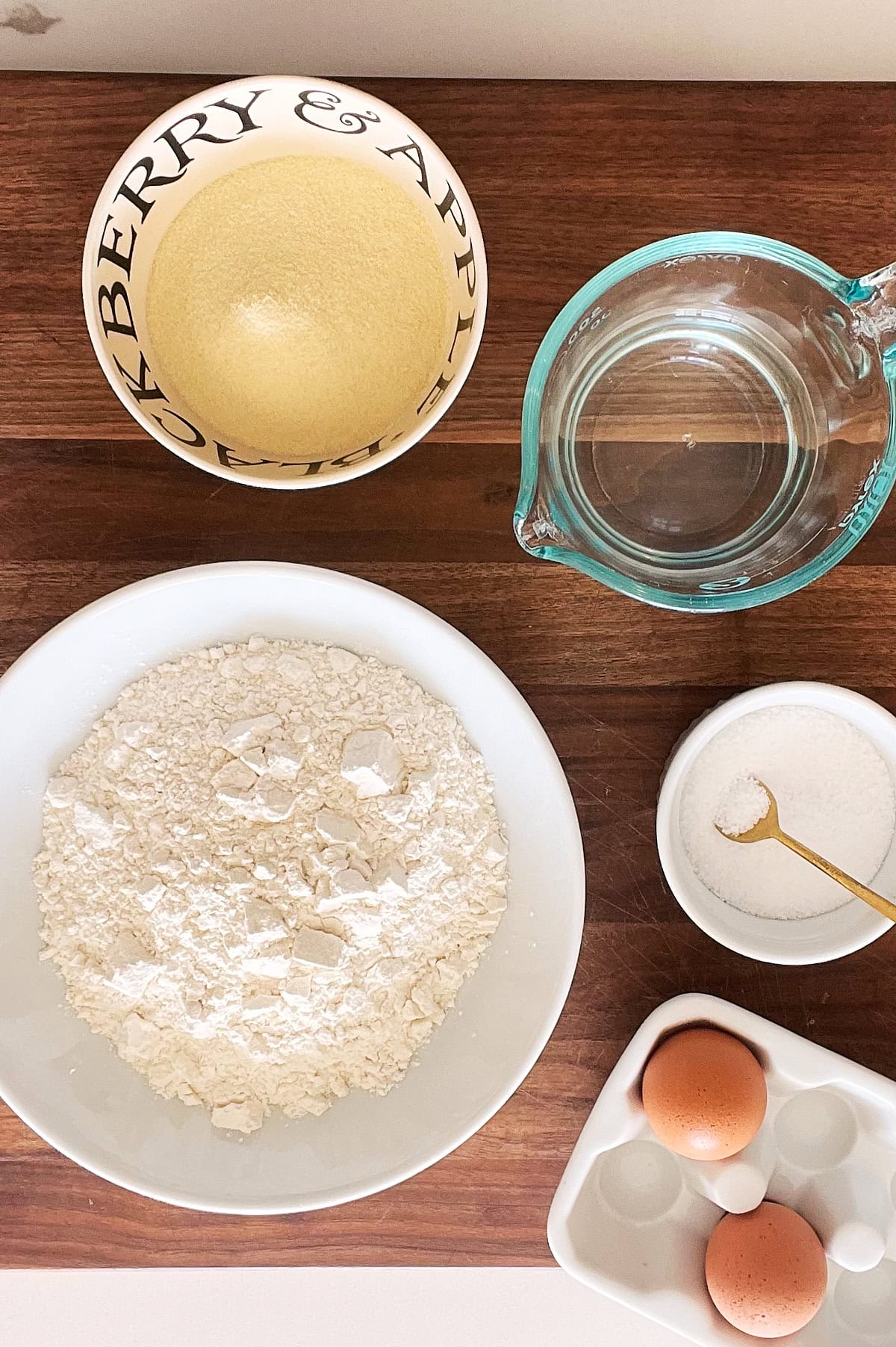
This pici recipe is a little different than most in that it contains eggs and not one but two kinds of flour. Eggs add a velvety richness and act as a binder with the flours.
Whether this is your first time making pasta or you love reading about making it, my homemade pasta dough recipe is a complete primer on how to make, roll and cut fresh pasta.
Here is what’s in it:
How to make homemade pici dough
Mix the dough
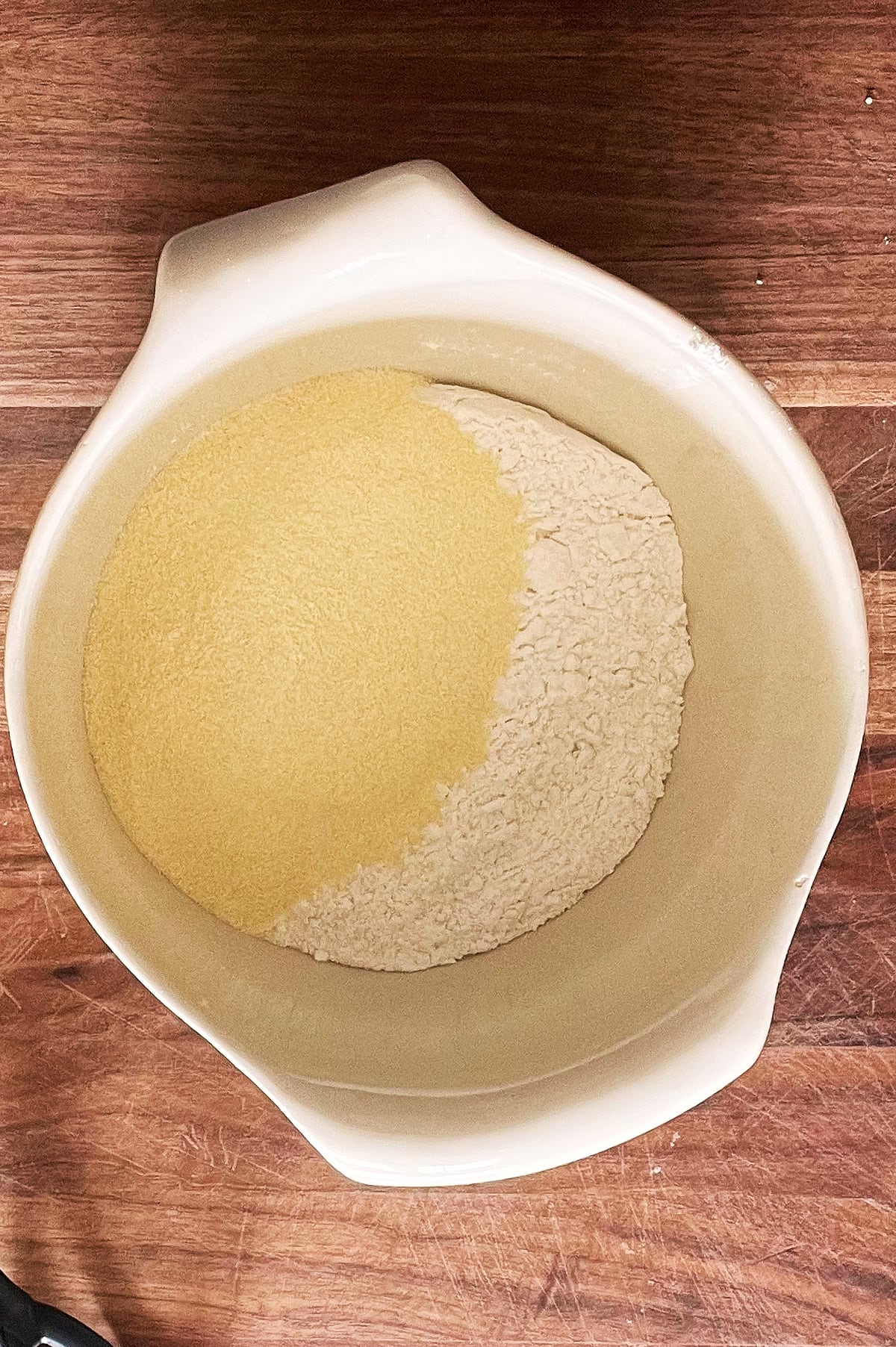
- Whisk the “00” and semolina together in a large bowl. You can then turn the flour out onto a clean countertop or if the bowl is wide and shallow, you can leave the flours in the bowl.
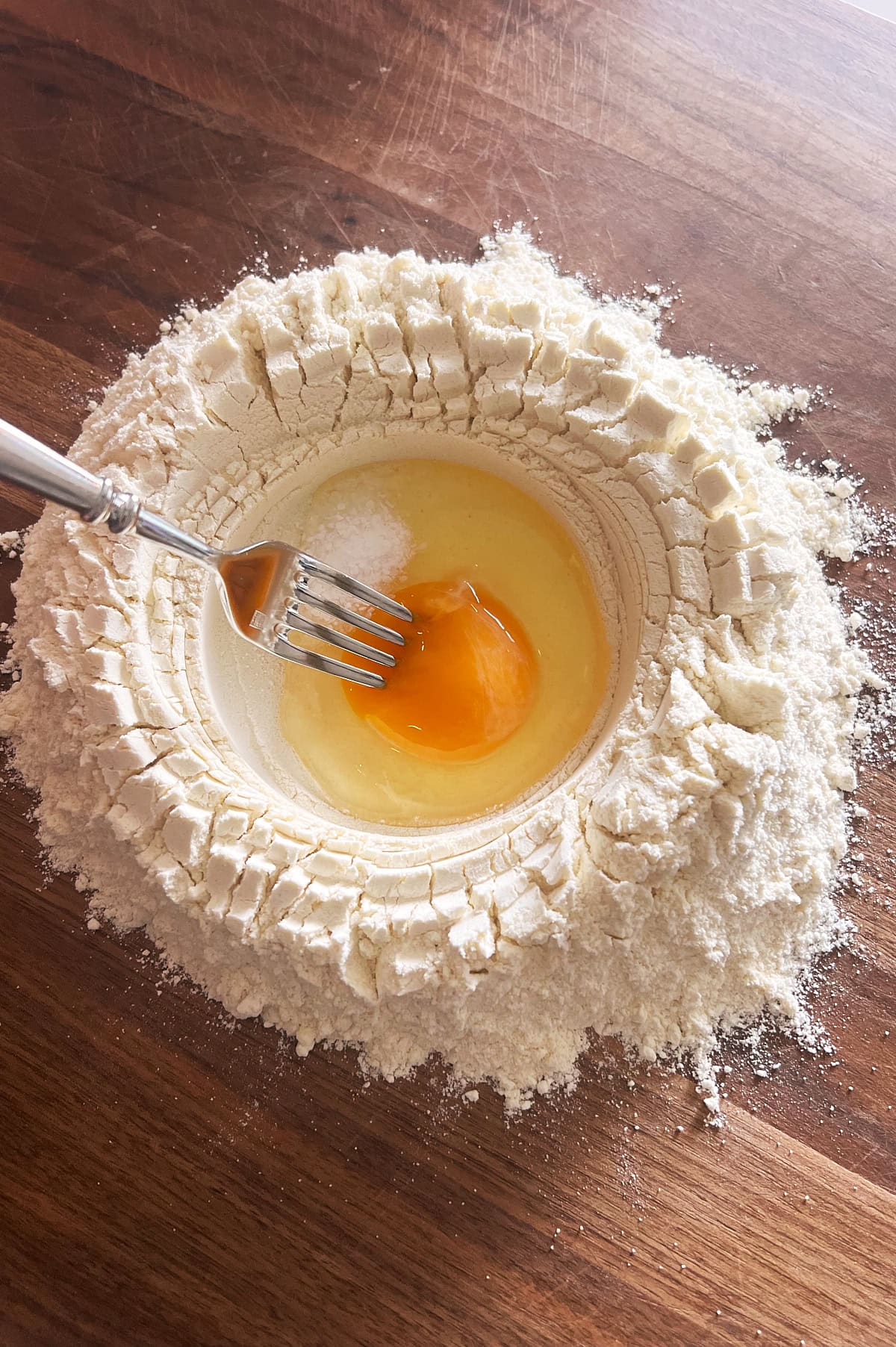
- Make a well in the flours and crack the egg into it. Use a fork to break up the yolk and beat the egg, pulling in flour at the same time.
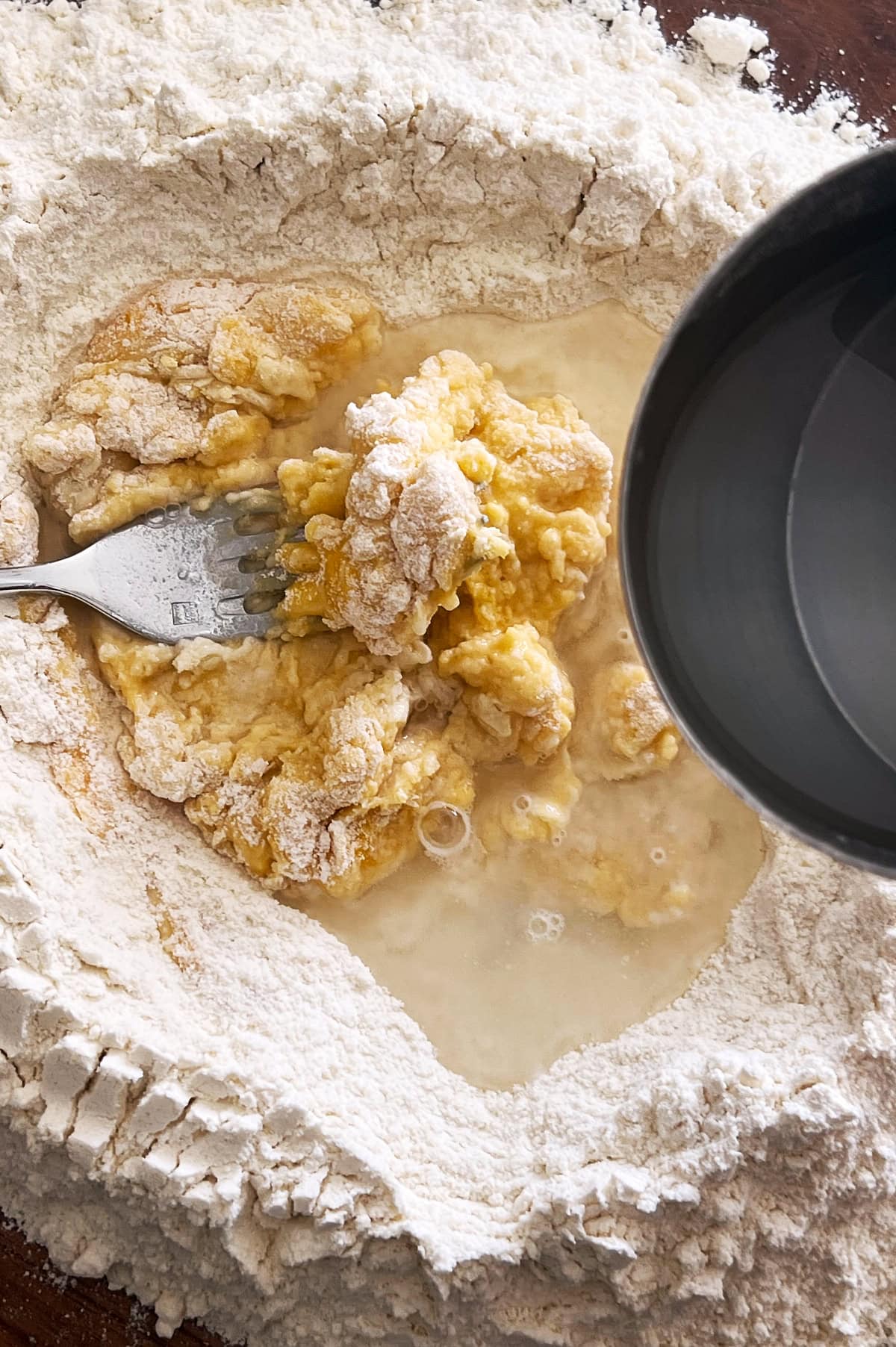
- Continue pulling in the flour. You’ll know when it’s time to add the water because the flour will not mix in anymore. Start by adding 1/2 cup of water and continue mixing.
- Get your hands involved pulling the dough into a ball. Add more water as needed, up to 1 cup.
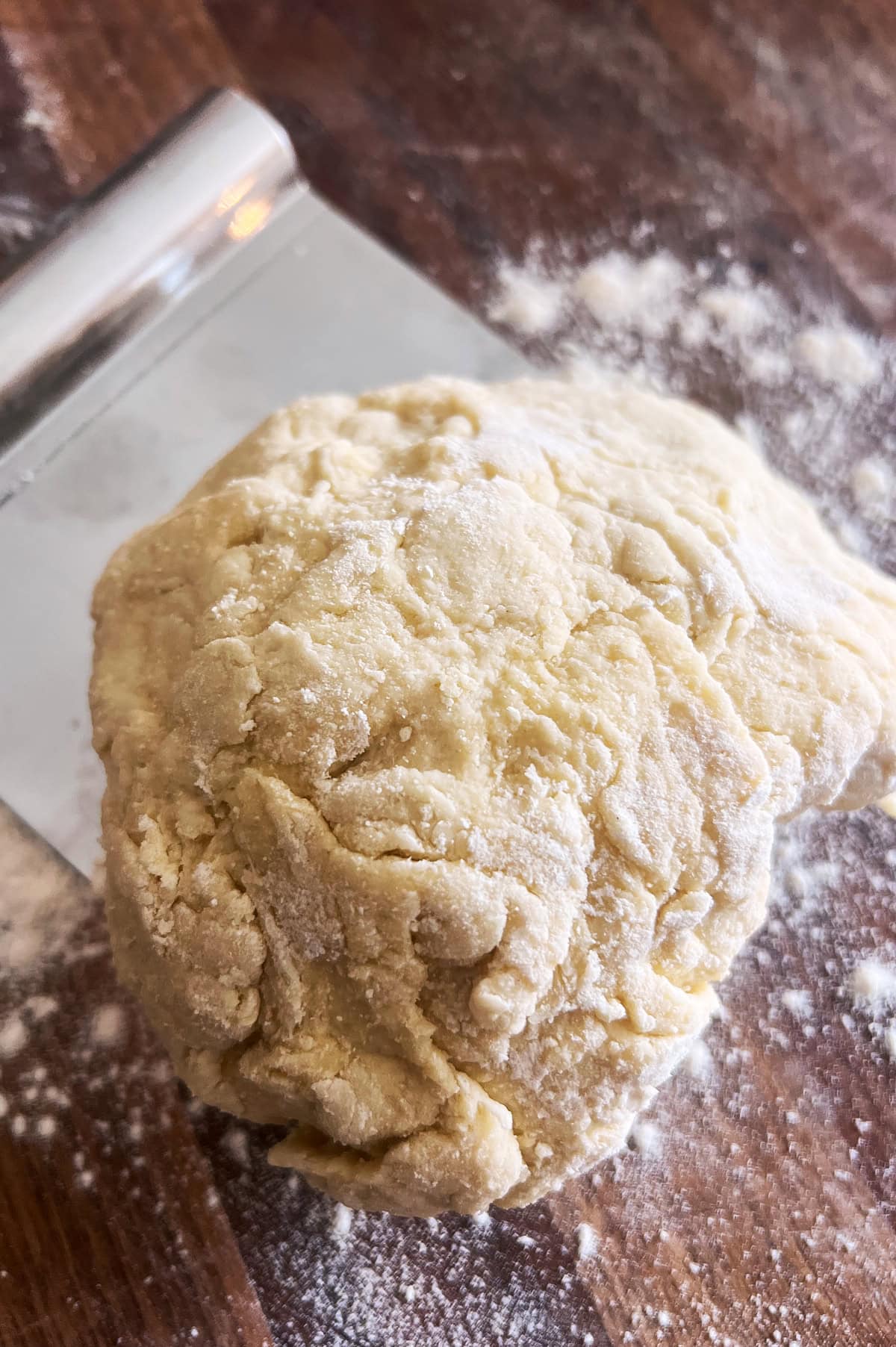
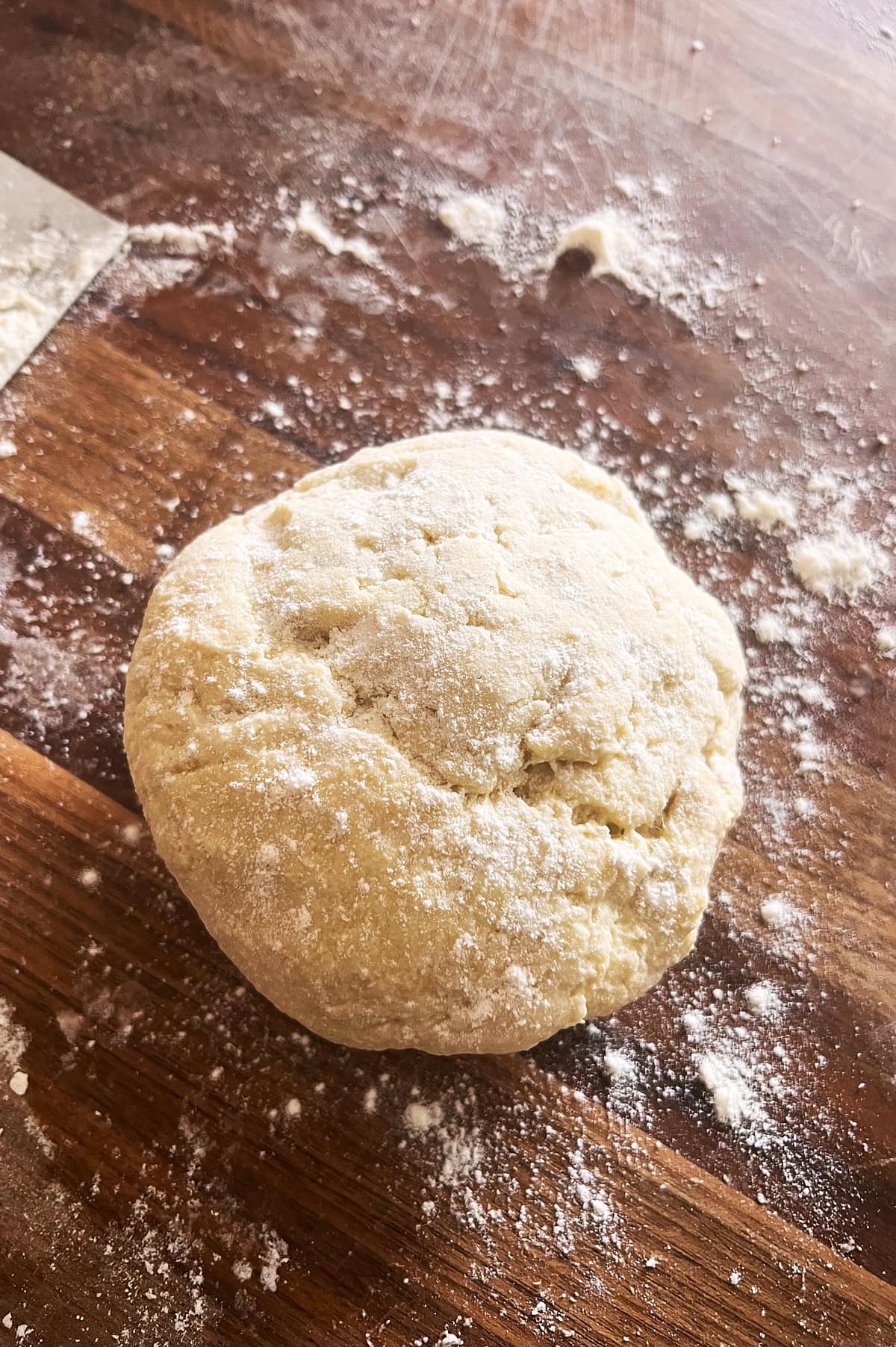
- Continue rolling the ball (don’t be alarmed—it will be “rough”) until it’s together and somewhat tacky.
- Lightly sprinkle some “00” flour over the dough and allow it to rest for 30 minutes.
Pro tip
The recipe makes about 1 lb of dough or about 90 pici noodles to serve 3-4.
How to cut and roll pici pasta
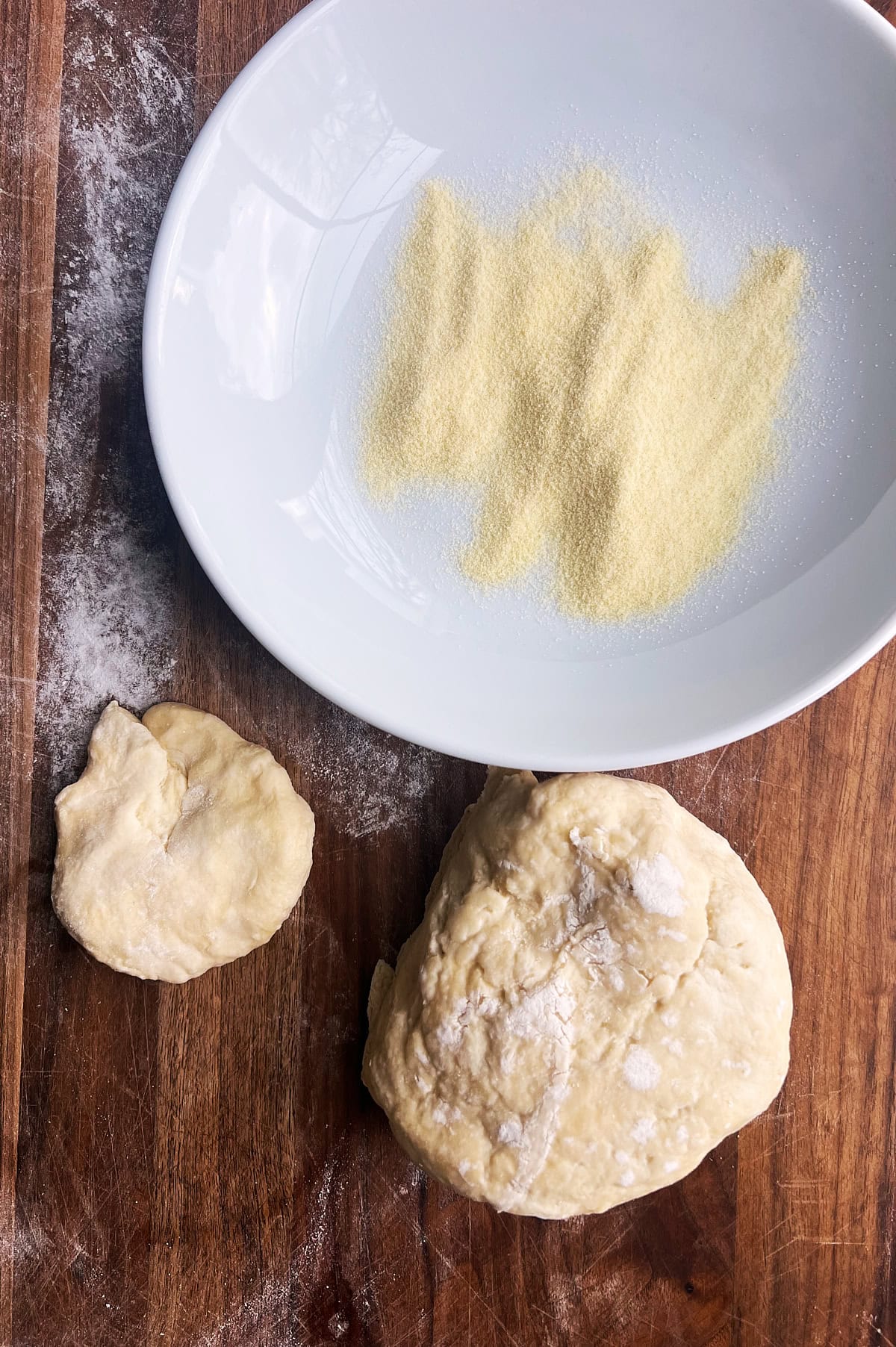
- After the dough has rested, use a knife (not serrated) to cut off a piece of dough that is about 1/2″ thick.
- Either use a rolling pin or a pasta attachment for a stand mixer to roll the piece to a round disk that is 1/8″ thick.
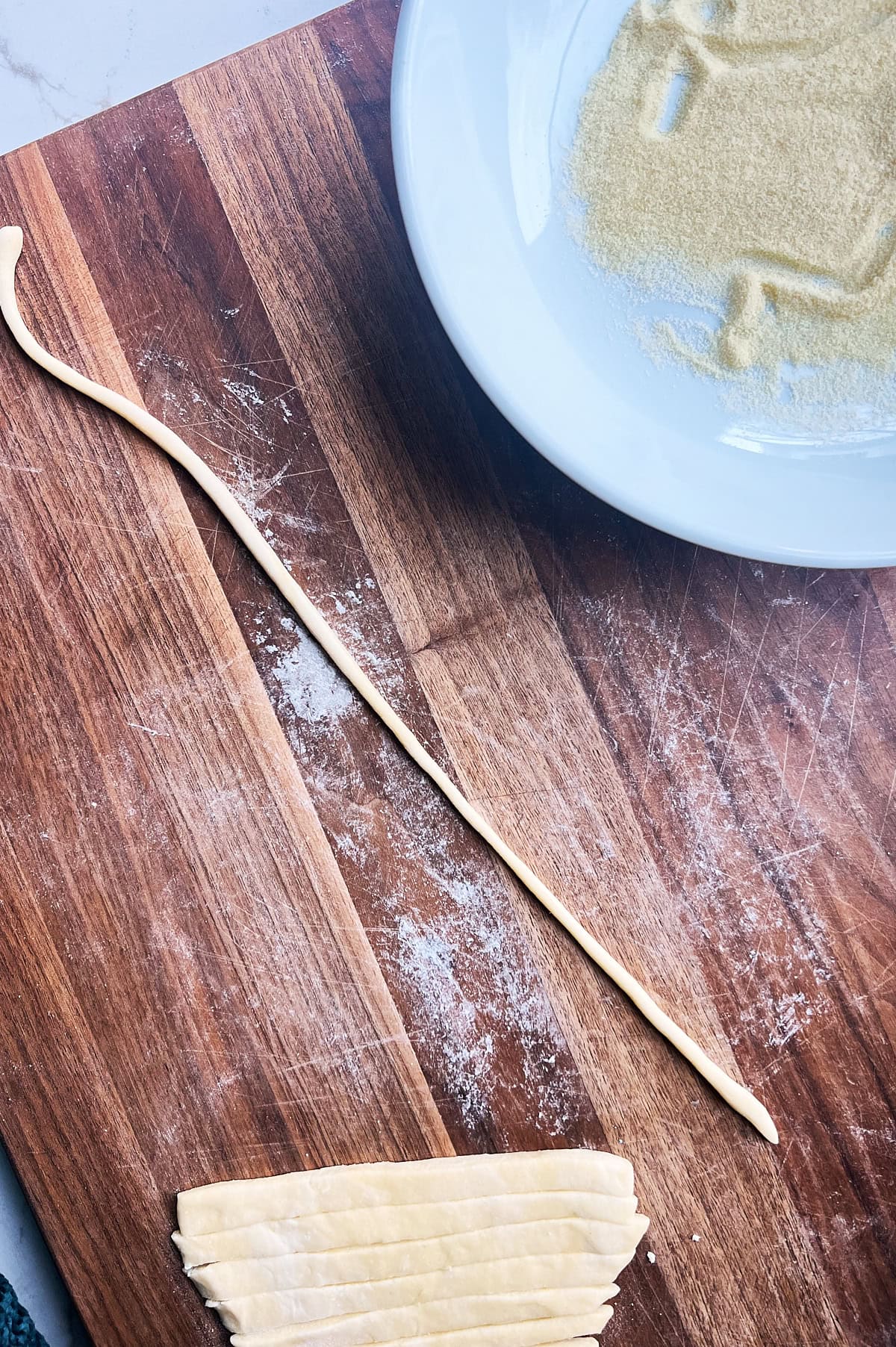
- Slice the disk into about 10-12 pieces as shown. Each piece will become a pici noodle
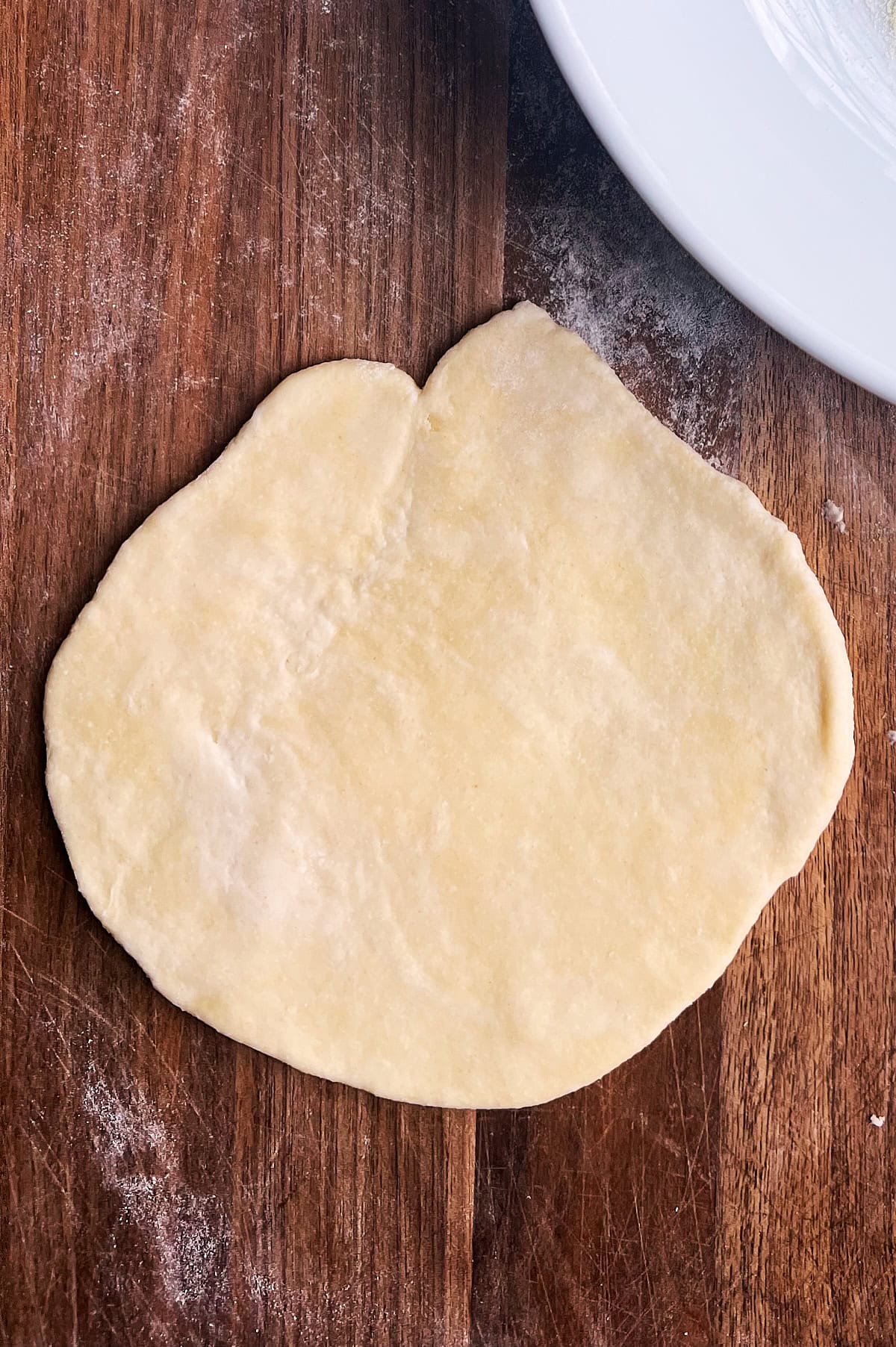
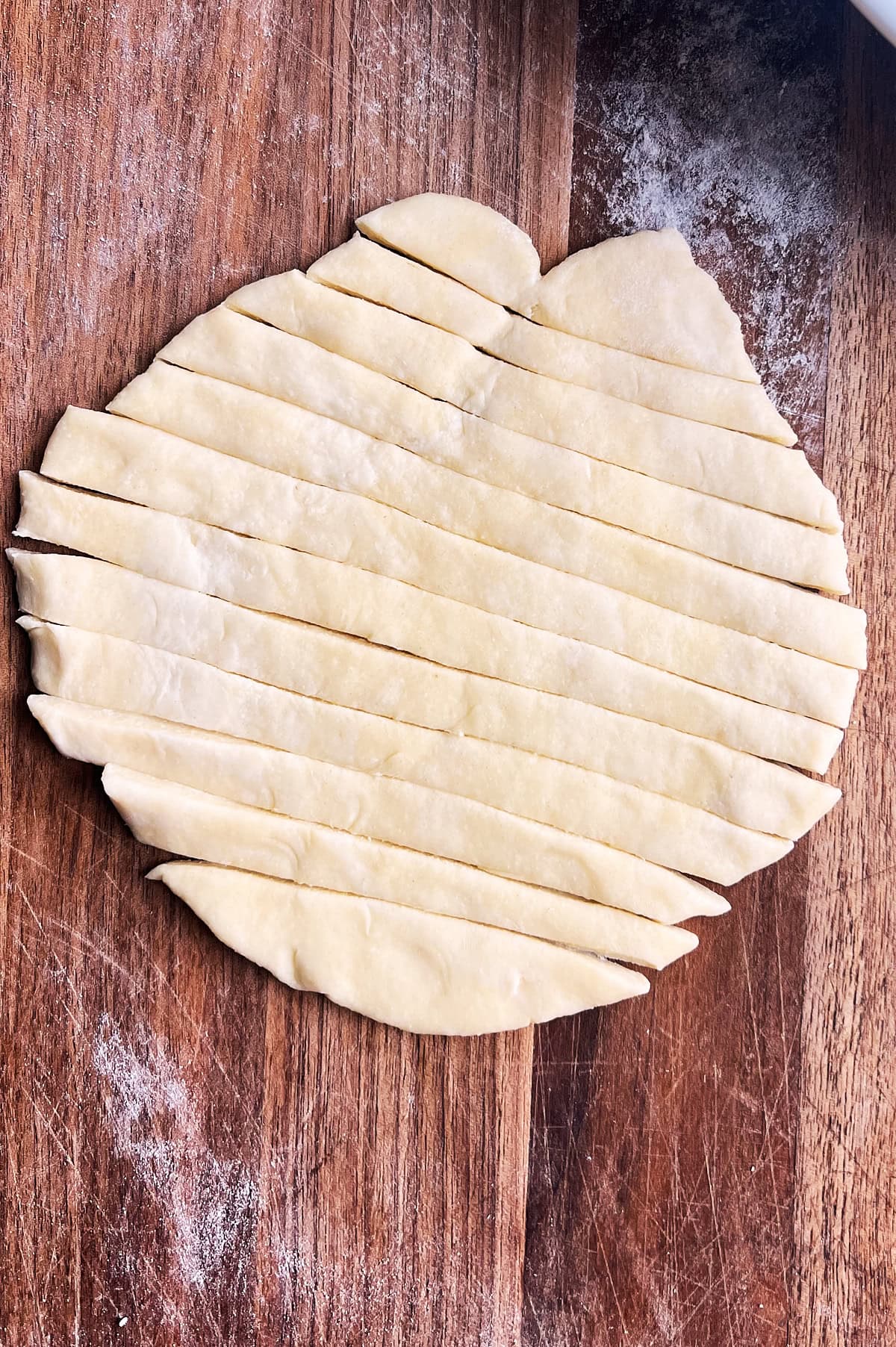
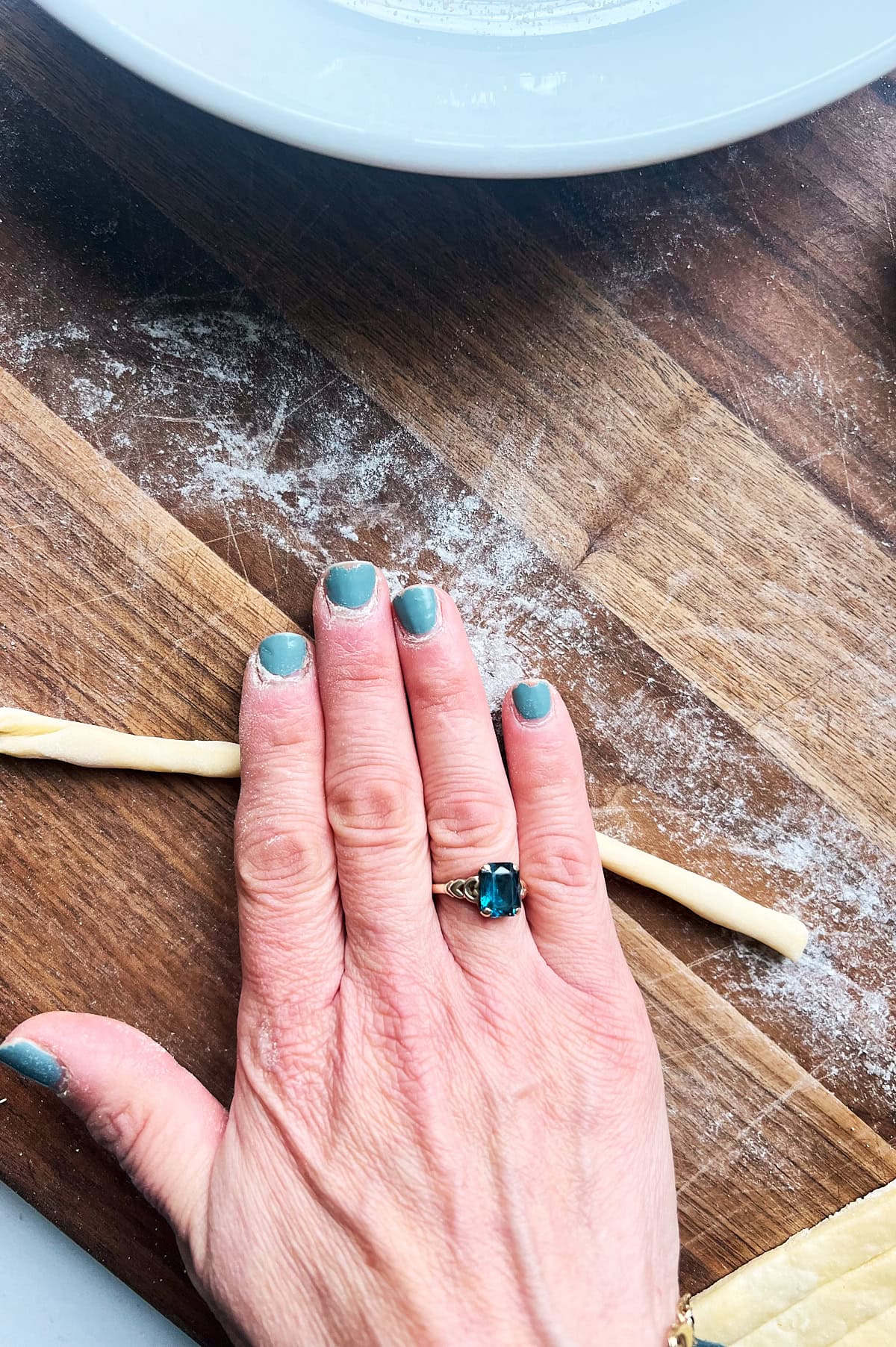
- Pick up one pici noodle and use the palms of your hands to roll the dough from the center out, making a long snake of a noodle. Make them as thick or thin as you like but they will expand a bit during cooking. Don’t flour the board before rolling.
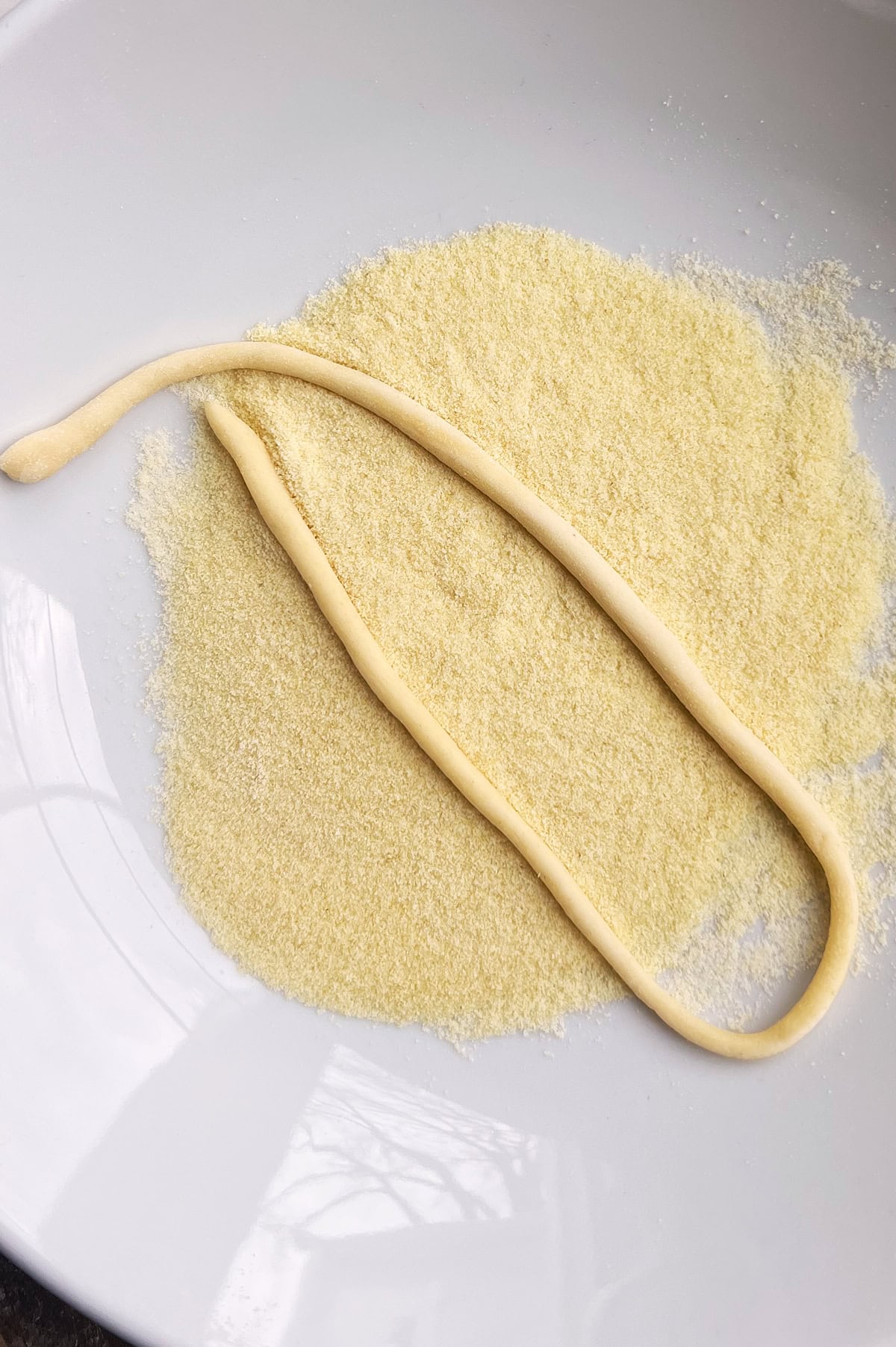
- Place the noodle in a bowl of semolina flour and coat it. Transfer to a semolina sprinkled baking sheet.
- Repeat with all the remaining noodles until you have used all the dough.
Pici cooking time
Bring a large pot of water to boil and season it generously with salt (I use either kosher or sea salt – do not use table salt). Gently and carefully, use your hands to transfer the pici into the pot and gently stir the pasta with a wooden spoon.
Cook for about 2-3 minutes until al dente. Taste a noodle and check the doneness. It should be slightly firm but chewy.
Drain in a colander. Do not rinse the pici.
Best sauces for pici
I already mentioned the wild boar sauce but my favorite pici sauces include a sweet tomato butter sauce or a herby fresh pesto.
Pici perfect 😉
Want pici perfection? Here are some key tips to follow.
When rolling the pici, resist using any flour. The tackiness helps form the pici noodle and you need the resistance to form the long strand.
If you are having trouble starting the pici shape, you can also bring the noodle up between your palms and move them back and forth like you’re washing your hands. Then place the noodle on the board and move your hands from the inside to the outside helping the noodle expand in length.
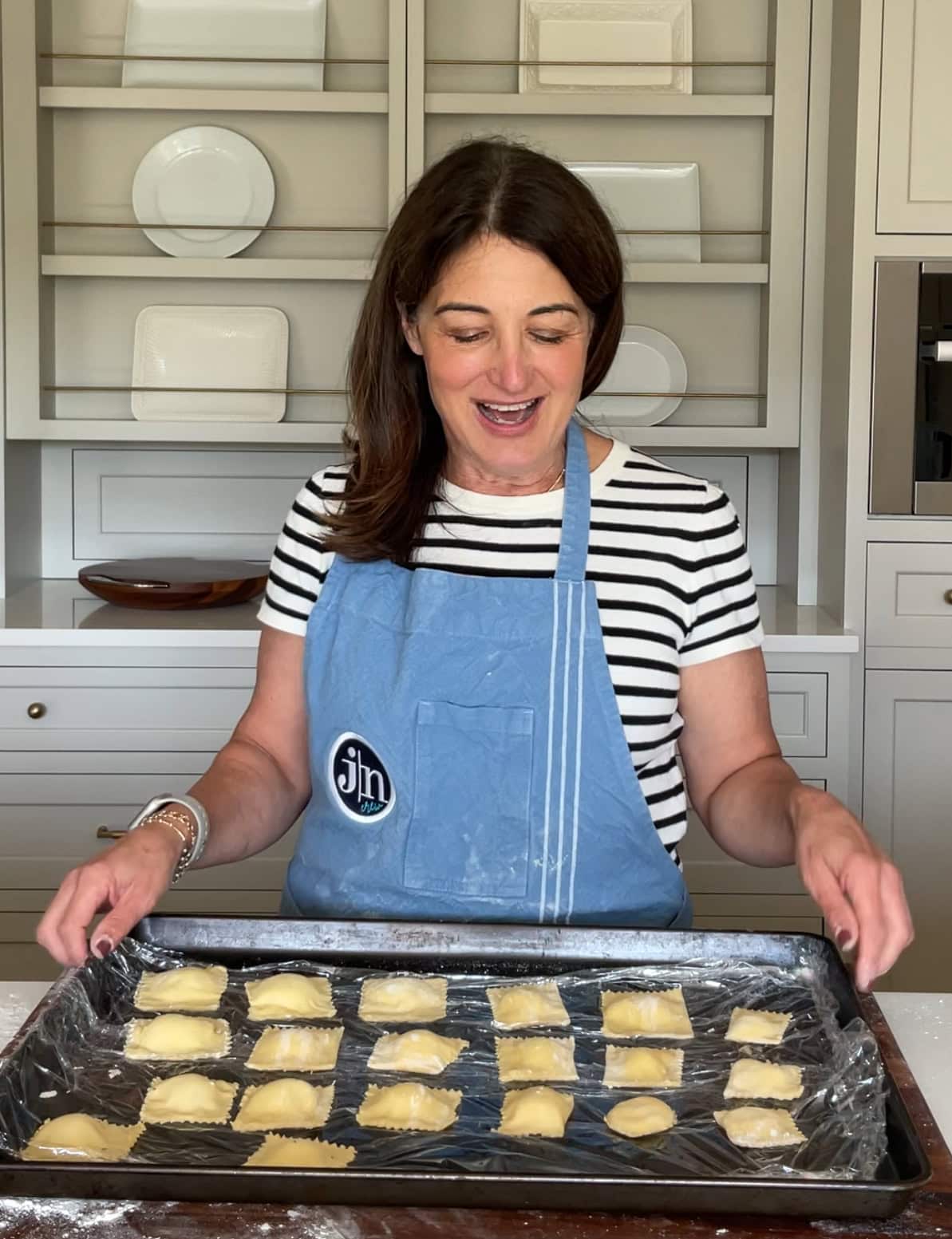
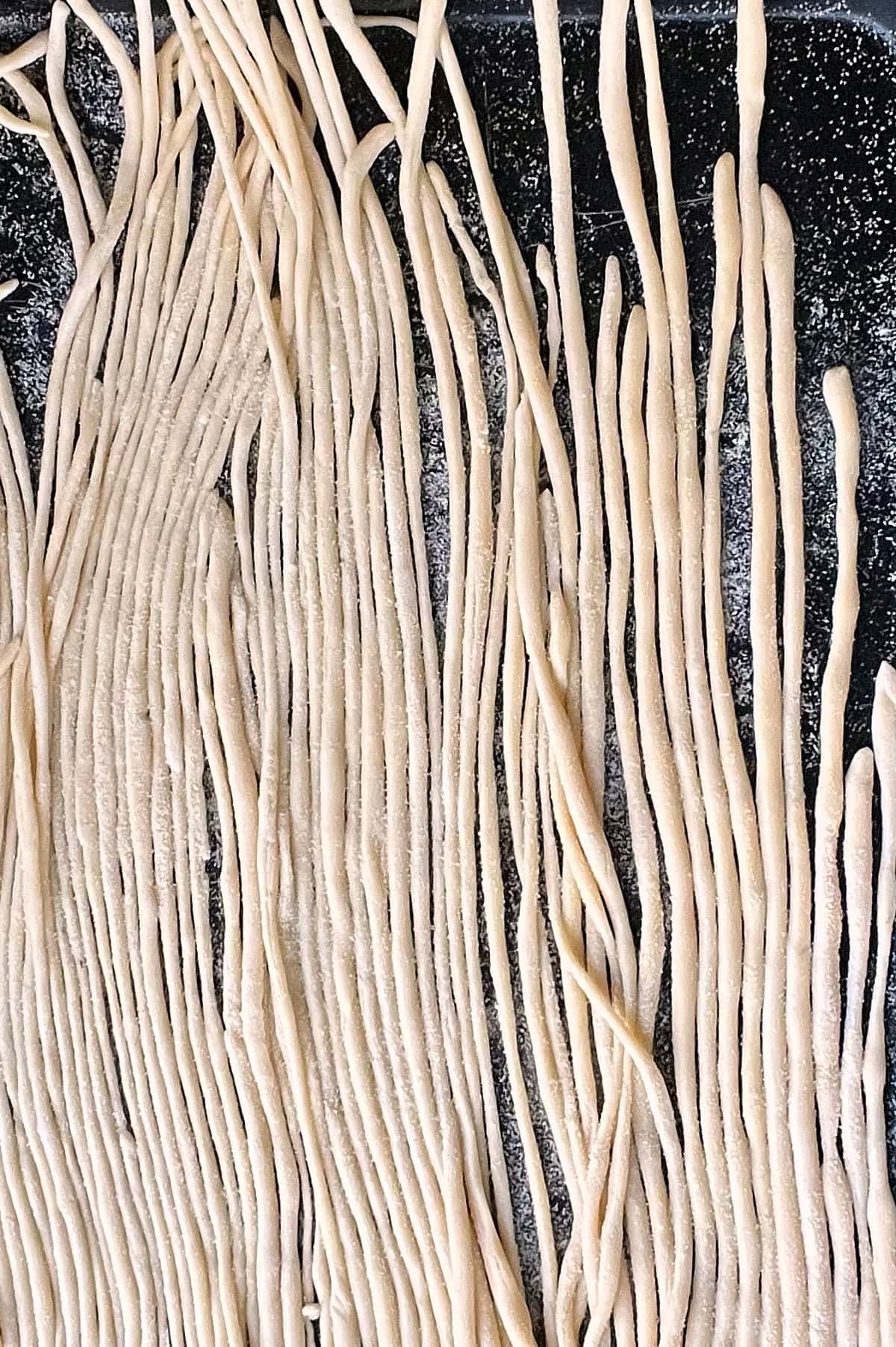
Cover the sheet pan of pici with a sheet of plastic wrap to keep it soft.
You can also roll the pici into a nest. This helps spacewise if you are planning on freezing them.
Freezing tips
I recommend freezing the pici into small nests. Pick up a small handful of noodles at one end and curve them into a nest. Place on a semolina flour baking sheet and repeat with more “nests. Place the baking sheet into the freezer and once firm, remove the nests to a resealable freezer bag.
Freeze for up to 3 months. Cook in boiling water, straight from the freezer for about 3-4 minutes (once the water comes back to boiling).

Made this recipe?
I’d love it if you’d share your review and leave a star rating and comment!
Hand-rolled Pici Pasta Recipe (kid friendly)
SAVE THIS RECIPE
Ingredients
- 2 cups ‘00” flour
- ⅔ cup semolina flour
- ½ teaspoon kosher salt
- 1 egg, beaten
- 1 water, start with 1/2 cup
Instructions
- Mix flours together along with the salt in a bowl or on a board. Make a well with a measuring cup and crack the egg into the well. Use a fork to break up the egg and whisk it into the flour, pulling a little flour in as you mix the egg in.Once the egg is mixed and absorbed into the dough, start with 1/2 cup of water, adding it a bit at a time and bring it all together with your hands. (The dough can also be mixed in a stand mixer or food processor.)2 cups ‘00” flour, 2/3 cup semolina flour, 1 egg, 1 water, 1/2 teaspoon kosher salt
- Add more water as needed and roll into a ball pulling in all the flour. The dough will be shaggy. Knead it for about 5 minutes and then let it rest for 30 minutes. The dough will be slightly tacky which is ok.
To roll the pici:
- Prepare a baking sheet with a piece of parchment sprinkled with a little semolina flour.Sprinkle some more semolina flour into a flat wide bowl.
- Cut 1/2" thick piece off the dough ball and flatten into a round disk about 1/8" thick. Slice the disk crosswise into 10-12 strips.
- Take one strip and using both hands, roll it into a long snake. The key here is to not flour the board. That tackiness is helpful in rolling and shaping the pici.
- As you roll each noodle, place it in the semolina bowl to lightly coat each noodle with the flour.
- Line the pici next to one another on a semolina floured baking sheet covered with parchment. You can put them close together especially if you plan to eat the pici the same day.
- Another tip is as you roll the dough, have your hands move from the inside of the noodle to the outside so as to make the noodle even from one end to the other. This will become natural to you as you roll each noodle.
- Get the kids involved they will love it. It might be easier for them to pick the noodle up and hold their hands like they're praying or washing their hands and roll the noodle back and forth as they rub their hands together.
- Repeat steps 2 and 3 with the remaining dough until you have made all the pici.
To cook the pici
- Bring a large pot of water to boil. Once boiling, season the water with a handful of sea or kosher salt. Use your hands to gently and carefully place the pici into the pot, taking care not to burn yourself.
- Cook for about 3 minutes, checking at the 2 minute mark. The pici should have some chew but also not be too firm.
- Toss with your favorite red pasta sauce. Pici is also sooo good with pesto sauce!